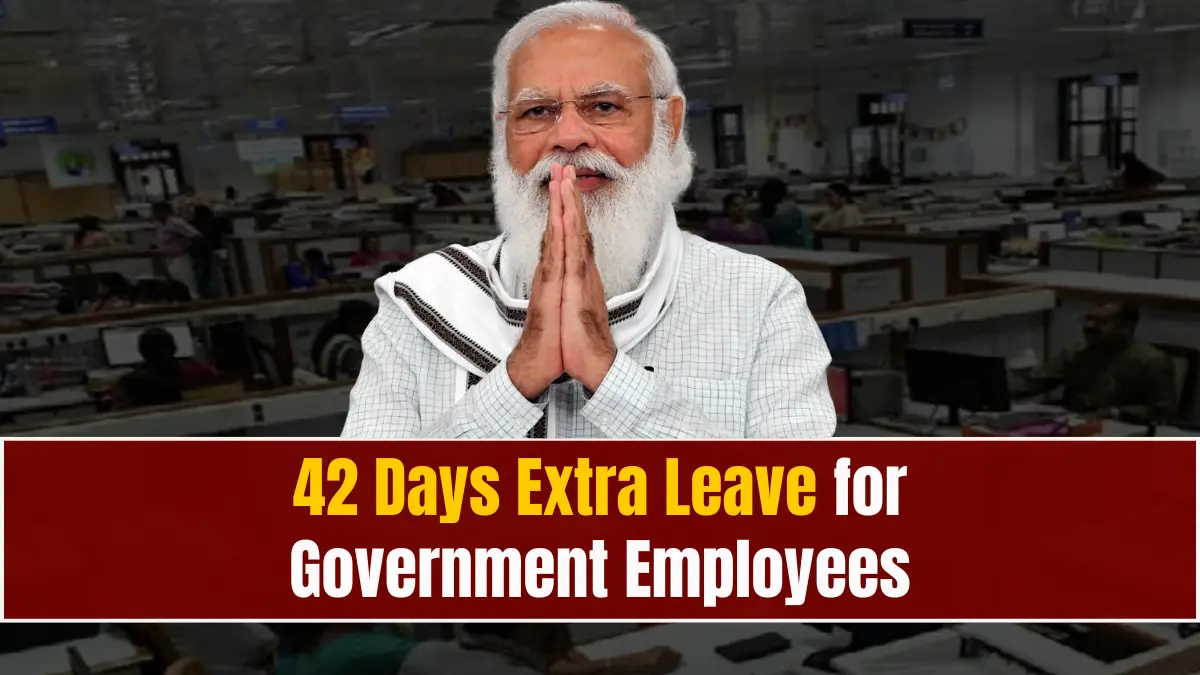
42 Days Extra Leave for Government Employees: The Indian government is rolling out a bold new leave policy, offering an additional 42 days of paid leave annually to its permanent employees. This transformative decision isn’t just about time off—it’s about redefining workplace culture in the public sector. Unlike previous policies, this initiative directly addresses stress, burnout, and employee satisfaction through meaningful action, not just incentives.
This move signals a shift from traditional administration to employee-centric governance, aligning with global HR trends that emphasize wellness, flexibility, and performance.
42 Days Extra Leave for Government Employees Overview
| Factor | Details |
|---|---|
| Leave Type | Extra Paid Leave |
| Total Extra Days | 42 Days Per Year |
| Eligibility | Permanent Central & State Employees |
| Service Requirement | Minimum 1 Year |
| Leave Format | Installments or Block |
| Start Date | Expected Mid-2025 |
| Carry Forward | Up to 21 Days (with conditions) |
| Departments Covered | Central Ministries, Railways, PSUs |
What’s Changing? Understanding the Leave Structure Overhaul
Gone are the days when government employees had to stretch limited leave across personal and family needs. With this 42-day bonus leave, eligible workers now get more freedom to plan their time. It’s not a replacement but an addition to existing leave categories like Earned Leave, Medical Leave, and Casual Leave.
The government aims to let employees club these extra days with other leaves, offering longer, more refreshing breaks—a welcome departure from the rigid, short leave windows of the past.
Who Qualifies for the New Leave Plan? Key Eligibility Rules
While the policy is generous, it’s not without structure. The eligibility criteria are designed to ensure accountability and fairness across departments. Only permanent central and state employees will benefit initially, with contract workers likely excluded in the first phase.

Employees must have completed at least one year of service and maintain a clean disciplinary record. Those meeting these standards can avail the leave either in blocks or spread across the year.
Expected Rollout and Department-Wise Implementation
The policy will not launch overnight. The government has planned a phased rollout, starting mid-2025. Central ministries and railways are first in line, followed by state departments and Public Sector Units (PSUs).
A centralized digital platform will track leave balances, feedback, and impact. If successful, this model could serve as a benchmark for future reforms across the public and even private sectors.
What Does This Mean for You? The Bigger Benefits
This isn’t just about having more holidays. The real benefit lies in what this policy enables:
- Reduced stress and improved mental health
- Stronger family and personal relationships
- Higher job satisfaction and lower attrition
- Increased efficiency and better public service delivery
It’s a win-win for both the employees and the system, ensuring that civil servants are energized, motivated, and committed to their roles.

Summary: Why This Policy Matters More Than You Think
With rising workplace pressure, this 42-day leave plan is not just a perk—it’s a necessity. By focusing on well-being over mere attendance, the government is laying the foundation for a resilient, future-ready workforce. Whether you’re a policy follower or a government employee, this reform is one to watch.
FAQs on the New Leave Policy
Only permanent employees with at least 1 year of service and a clean record will initially qualify.
Yes, the policy allows combining bonus leave with earned leave for longer breaks.
The entire 42 days are fully paid, as per current policy proposals.